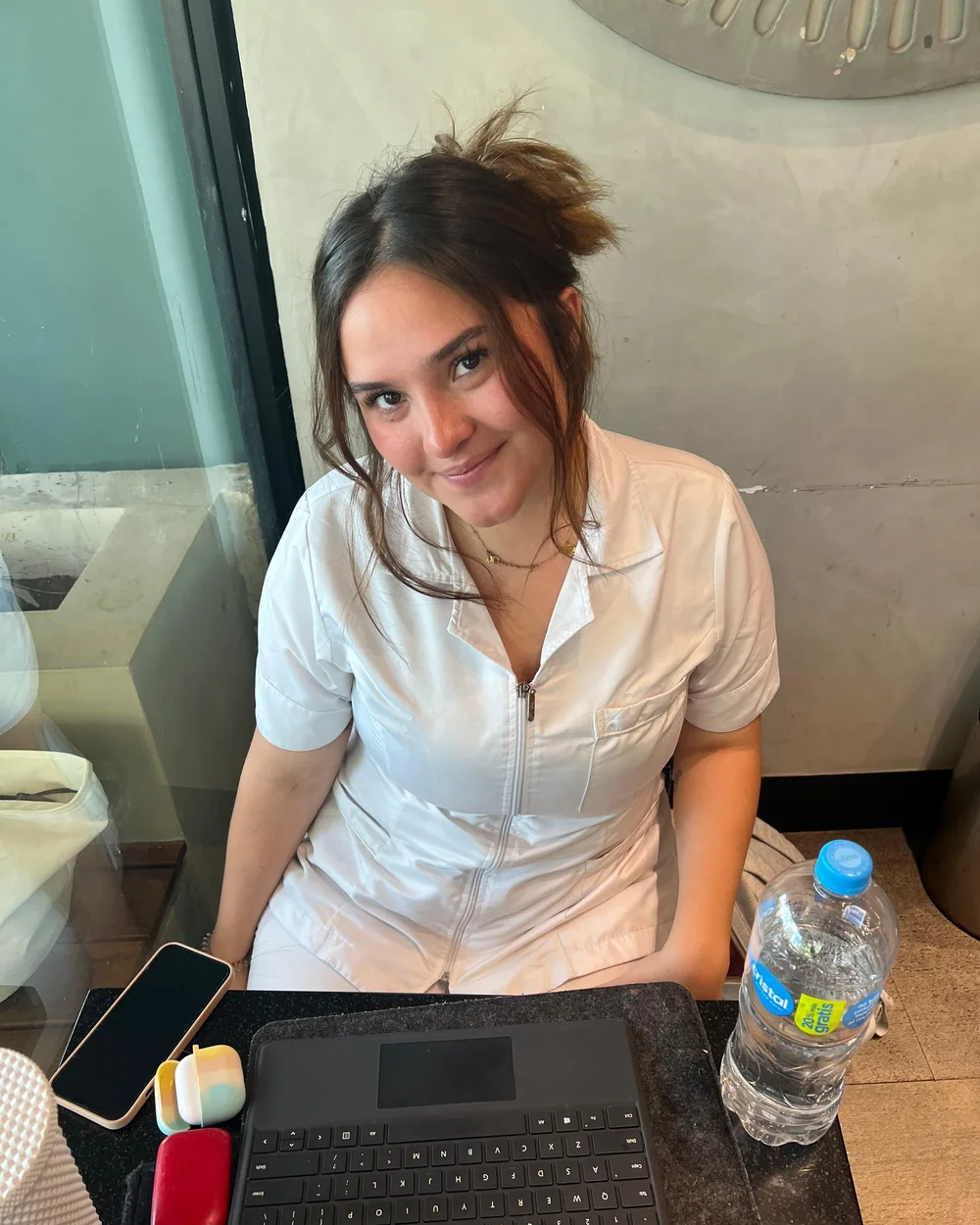

My sister, the doctor,
and her agent.

Andy is my little sister. She's in her social service year, the last step before getting her medical degree: every day she drives an hour out of the city to be the doctor of a community health center, and at night she studies for the ENARM, Mexico's medical residency exam.

She has never coded for a living. Little by little, she went from asking questions in a chat to running her own agent in Antigravity, built around how she actually works.

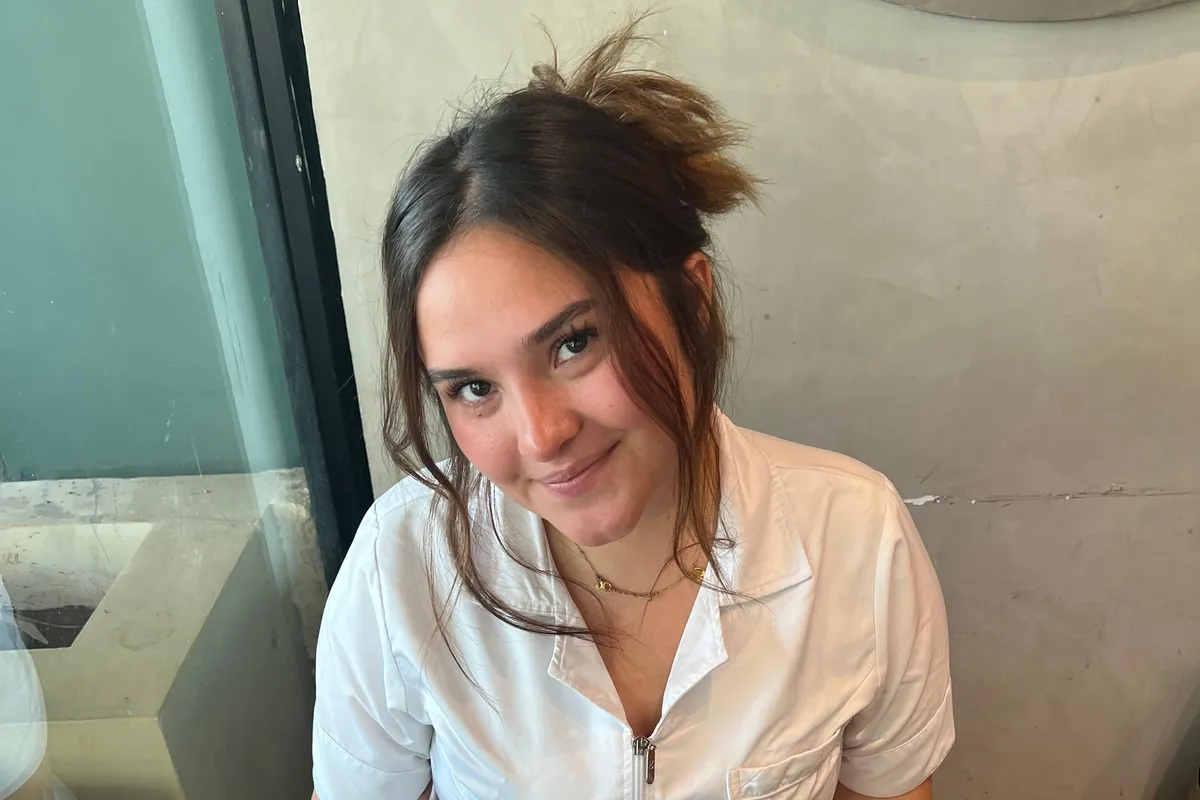
Andy smiling in her white scrubs, with her tablet and keyboard on the table
Dra. Andy, in her scrubs (with her keyboard, always)
WhoAndy, a physician in her social service year
Her two jobsClinic notes by day, residency exam prep by night
TodayAntigravity 2.0, on her own laptop
My partBig sister and tech support: I set things up, she made them hers
01 · how it grew

Gradually, naturally, one friction at a time.

We never sat down to design "a system". Every step came from something that bugged her between shifts, and the next step fixed it.

ObsidianGemini CLI Back then

Notes in Obsidian, plus Gemini CLI

I set up an Obsidian vault for her notes and pointed Gemini CLI at that folder, so her context lived in plain files instead of disappearing in chat tabs.

What bugged herThe terminal felt heavy in the middle of a clinic day, and long sessions mixed patient notes with studying.
Then

Her own rules and a study skill

The instructions she kept repeating became an AGENTS.md (how her notes must look, what to double-check) and a study skill, tutor-enarm, with a small Python script that keeps her schedule.

What bugged herShe wanted visual study tools, and a way to bring context from one conversation to another without copy-pasting.
Antigravity Today

Antigravity 2.0

Everything came together in one place: a fresh conversation for each task, past conversations she can @-mention when she needs them, and interactive study pages right next to the chat.

What came with herHer notes and rules, at every step. They were always just Markdown files.
02 · a day with her agent

What her day looks like now

Morning · at the clinic

Notes in her own shorthand, double-checked

Between patients she dictates what she found, the way doctors actually talk. The agent turns it into a note in the exact format her clinic's records need, ready to paste, and points out anything that doesn't add up (like a diagnosis that doesn't match the lab results she just dictated) so she can take a second look.

She's still the doctor: the agent drafts and double-checks, she reviews and decides.
Night · studying for the ENARM

A study plan that adapts to her energy

Every night she picks how much she has left in the tank:

Verde · a short oneEstándarHiperfoco

The full study calendar stays hidden, so it never feels like a wall of pending topics. Each block starts with a summary of the official clinical guideline, waits until she says she's ready, and then gives her practice cases.

One thing at a time, never everything at once.

03 · under the hood

Simple pieces, each doing one job

No platform, no database, no backend.

Her setup is a folder on her laptop and a few plain files. The rules and the skill are where her medical judgment lives, written in her words.

The small Python script handles the exact parts (timers, review intervals, searching her review manuals), and the model does what it's good at: explaining, connecting and asking her questions.

You
AndyDictates findings, picks her study mode, makes every clinical call
Agent
Antigravity 2.0One conversation per patient or study block, study pages in the side panel
Her rules
AGENTS.md + the tutor-enarm skillNote format, safety double-checks, how a study block flows
Plain files
Markdown notes, manuals, one Python scriptThe same notes she started with in Obsidian
04 · the trick I taught her

One conversation per thing.

Before: everything lived in one long conversation, a full day of patients and a night of studying in the same thread. The strict format of her clinic notes leaked into her study summaries (and the other way around), and finding anything meant scrolling forever. So I showed her the habit I use every day: start fresh for every task, and bring back only what you need.

Antigravity 2.0 · Andy's workspace
@Follow-up visitquiz me on today's case
Got it. I'll bring in only the diagnosis from that visit. Here's the guideline summary first, tell me when you're ready for practice cases.
Ask anything, type @ to bring in another conversation

An illustration of the habit, not a real patient.

A fresh start per taskEvery patient, every study block. Nothing from the last one lingers.
@ brings back what mattersOnly the context she chooses, from the conversation she points to.
Her notes stay cleanClinic formats stay in the clinic, study stays in study.
05 · what i learned from her

What a doctor taught me about agents

1

Gradual beats all at once.

Every step solved a friction she actually felt, so she kept using it. Nobody sticks with a system they didn't ask for, and nobody had to convince her of anything.

2

Plain files travel.

Her notes started as Markdown, so every move (rules, a skill, Antigravity) cost her nothing. Her knowledge simply became the agent's behavior.

3

Fresh starts are a superpower.

Choosing when to start clean, and what to bring back with an @-mention, gives anyone real control over context. No engineering degree needed.

4

Code for the exact parts.

Timers and schedules belong in a script. Explaining and reasoning belong to the model. Each does what it's reliable at.

5

Design for how the brain works.

Hiding what overwhelms (the calendar, the backlog) is what made her consistent. Calm beats complete.

Fun fact: Andy gathered the details for this page with her own agent and emailed them to me. Of course she did. 🫐

Technology as a tool, not a threat.

That's what my mom taught us, and what I get to watch my sister live every day.